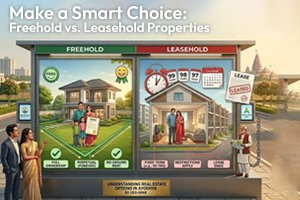
What is a Freehold Property?
When you buy a freehold property, you become the absolute owner of both the building and the land it stands on. There is no expiration date on your ownership. It is yours forever, meaning you can easily pass it down to future generations.
- Complete Control: You have the full freedom to sell, renovate, or rebuild the property as you see fit.
- No Ground Rent: Since you own the land, you do not have to pay any annual lease fees or ground rent to a landlord.
- Easier Financing: Banks and financial institutions generally prefer freehold properties, making the home loan approval process much smoother and faster.
What is a Leasehold Property?
If you buy a leasehold property, you only own the building or the right to use the space for a specific period—usually 30, 90, or 99 years. The actual land belongs to someone else, such as the government, a development authority, or a private freeholder.
- Time Limit: Your ownership rights expire when the lease period ends. After that, the property goes back to the landowner unless you successfully renew the lease.
- Extra Ongoing Costs: You will usually have to pay a yearly ground rent or lease fee to the actual landowner.
- Restrictions: You do not have total freedom. You often need written permission from the landowner to make major modifications, renovate, or even sell the property.
Key Differences at a Glance
Feature | Freehold Property | Leasehold Property |
Ownership | You own the land and the building completely. | You only own the building or usage rights. |
Time Period | Forever (Perpetual). | Fixed duration (e.g., 99 years). |
Ground Rent | None. | Yes, paid annually to the landowner. |
Selling & Modifying | Easy to sell, transfer, or renovate. | Requires permission from the landowner. |
Bank Loans | Easy to secure. | Can be difficult, especially if the lease is short. |
Why This Matters When You Buy Land in Ayodhya
When looking for a plot, you want an investment that is legally secure and grows in value over time. As a trusted real estate development company in Ayodhya, Geo Spar Developers focuses on delivering high-quality, sustainable, and legally secure properties. We know that buyers want peace of mind, which is why freehold properties are generally the safest bet for long-term wealth creation.
For example, our newly launched premium plotted township, Aero Vista City, features 51 exclusive plots thoughtfully planned with next-generation infrastructure. Located just minutes away from the Ayodhya International Airport, it offers a secure gated community with wide illuminated roads and 5-tier security. Investing in premium land plots like these ensures long-term value amid the city’s booming growth.
How to Choose the Right Property for You
- For Long-Term Security: If you want to build your dream home and leave a legacy for your family, freehold is the best choice.
- For Investment: Freehold land generally appreciates faster, has a cleaner legal title, and is much easier to sell later.
- Check the Documents: Always ask about the property’s title before signing any checks. At Geo Spar, we operate with a Customer-First Approach. We ensure complete transparency from the moment you inquire to the day you receive your documents. We offer honest real estate solutions with no hidden clauses and no false promises.
Frequently Asked Questions (FAQs)
Can a leasehold property be converted to freehold?
Yes, in many cases, it is possible to convert a leasehold property to freehold. This usually involves paying a conversion charge to the government or the original landowner and obtaining a “No Objection Certificate” (NOC) and legal conveyance deed.
Are home loans available for leasehold properties?
Yes, but it depends heavily on the remaining time left on the lease. Banks are usually happy to fund properties with long leases (like 99 years), but they will hesitate or refuse if the lease is short (e.g., less than 30 years left).
Why are leasehold properties sometimes cheaper?
Leasehold properties are often cheaper upfront because you are not purchasing the land forever. However, you must factor in the recurring lease rents, maintenance fees, and future renewal costs, which can add up significantly over time.